

What is Druidry?
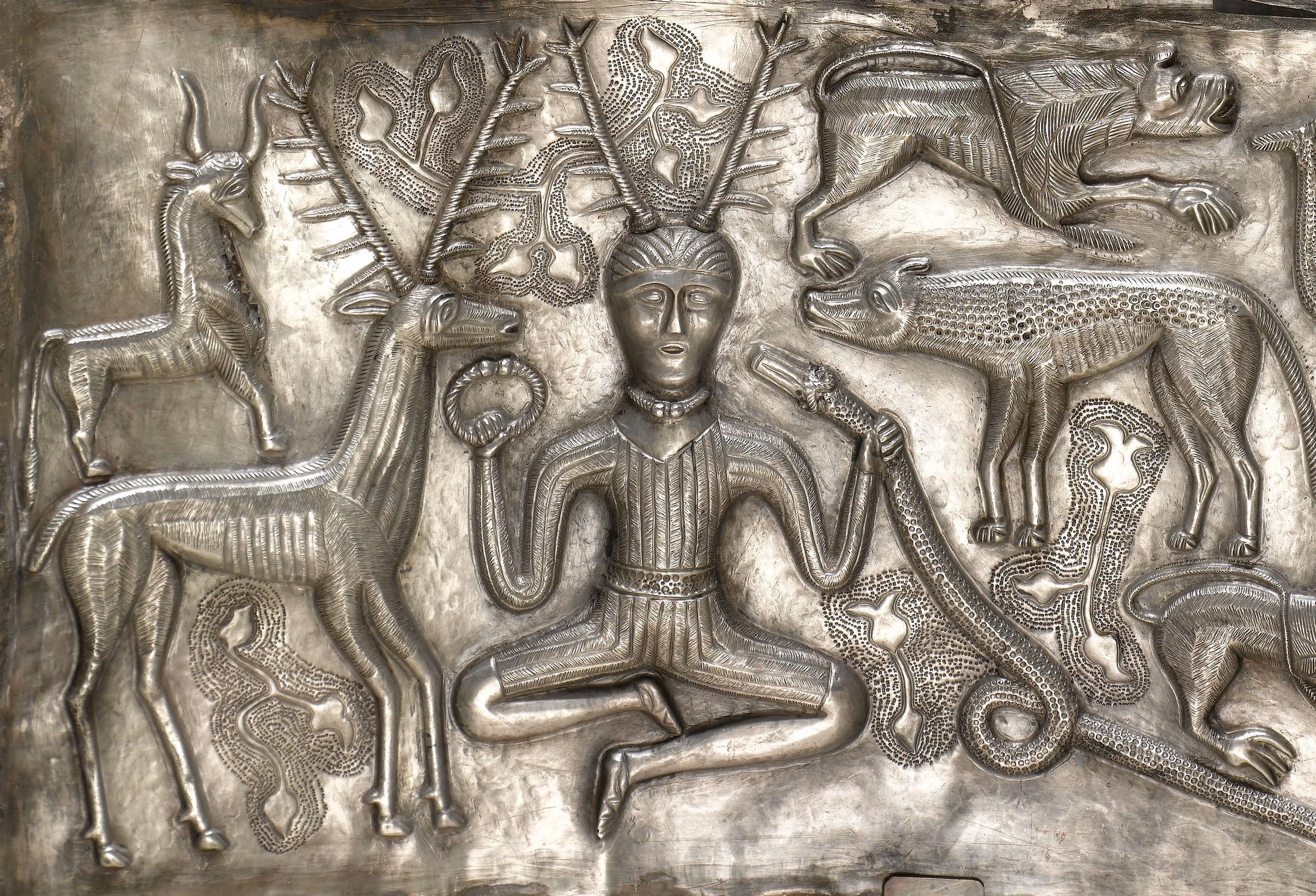
Image: The Gundestrup Cauldron, circa 150 BCE to 1 BCE
Druidry (Celtic Spirituality) is a living spiral path that invites you into a deep and living relationship with nature. It awakens a love for the land, the earth, and all of creation, uniting it with the love of creativity and the arts. It is a path where ancient stories, sacred stone circles, and whispering trees become teachers, guiding us toward a profound connection with the universe itself.
At its heart, Druidry is about belonging and connection to the land - honouring our ancestors, nurturing community, and recognising one another as fellow travellers on a shared journey. It is a path of peace, rooted in reverence for life and an understanding that all beings are interconnected. Through this lens, every action becomes an opportunity to live in harmony with the world around us.
Unlike many spiritual traditions, Druidry has no single founder, no central scripture, and no fixed place of worship. Its wisdom arises from the living landscape and the timeless realm of spirit. It is experienced directly through inspiration, through nature, and through your own relationship with what is sacred. Open and inclusive, Druidry does not ask for blind belief or adherence to authority. Instead, it encourages personal discovery and a deep listening to the rhythms of the natural world. It does not seek escape from life, but calls you to fully embody it, present, grounded, and aware.
The ancient Druids were the spiritual custodians of Celtic societies across Europe and the British Isles. They were philosophers, healers, poets, and mystics who saw the world as alive with spirit. Both men and women were believed to walk this path, reflecting a respect for balance and equality. They honoured the elements, the directions, and the wisdom found in trees, plants, animals, and the land itself. Knowledge was not written down but carried through memory, oral tradition, and lived experience.
Some traditions and legends speak of even older origins with stories of knowledge passed down from a lost civilisation, often associated with the myth of Atlantis. These tales describe the Druids who traveled across lands and seas during the fall of Atlantis, sharing insights into the deep connection between nature and spirit.
Celtic mythology and folklore are central to Druidry with stories of the many gods, goddesses, and their symbolic imagery. Artefacts such as the Gundestrup Cauldron, dating from around 150 BCE to 1 BCE, depict powerful scenes of ritual, nature, and divinity. Figures like the deity Cernunnos, often shown with antlers and surrounded by animals, embody the deep bond between humanity and the natural world.
Over time, Druidry has continued to evolve as a living tradition, shaped by changing cultures while remaining grounded in its core truth: that the sacred is woven into the fabric of existence. Traditionally, its teachings unfold through three streams—the Bards, keepers of story and song; the Ovates, seers and healers; and the Druids, philosophers and teachers. Together, they represent a holistic path of creativity, insight, and wisdom.
At its essence, Druidry reminds us of a simple yet powerful truth—there is no separation between spirit and matter. The divine flows through nature, and through us, as part of a vast and living whole.
What is Awen?
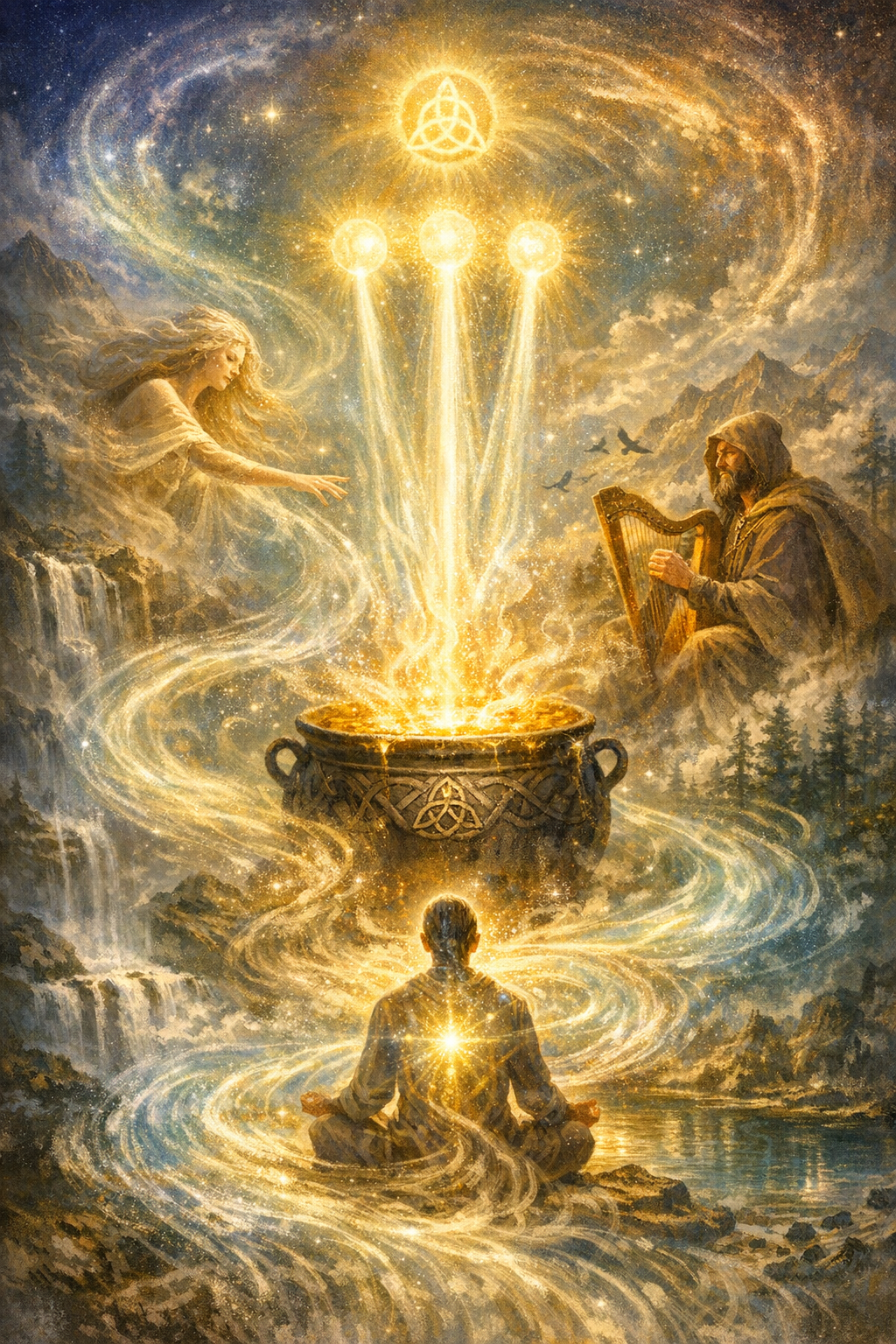
Awen (pronounced ah-oo-en) is the sacred spark of inspiration—the flowing spirit that awakens creativity, insight, and connection. Rooted in Welsh tradition, the word combines “aw” (flowing) and “wen” (spirit), evoking a sense of divine energy moving through us like a living current.
Often described as a blessing, Awen is the breath of inspiration itself—an unseen force that stirs the soul and opens the heart.
In legend, Awen flows from the cauldron of the Goddess, most famously in the story of the great poet Taliesin. It is the gift of vision, creativity, and deep knowing—an energy that transcends cultures, echoing ideas like Shakti in Hindu philosophy or the Dao in Chinese wisdom traditions.
Awen is more than a concept—it is an experience.
It moves through us as flashes of insight, surges of energy, and moments of clarity. It rises within the body, flows like water through the heart and mind, and connects us to our life force—known in Druidry as Nwyvre. When we open to Awen, we begin to see beyond ourselves and feel our place within the greater web of existence.
Many Druids work with the mantra “ah-oo-en”, using its sound to open the heart in meditation and ritual. Through this practice, Awen becomes a living presence—nourishing the soul, supporting healing, and guiding us toward greater joy and understanding.
The key to Awen is simple: allow it to flow. It is not something we must seek outside ourselves—it already lives within.
Historically, Awen appears in early texts such as Historia Brittonum (circa 830 AD) and later in the ancient Welsh manuscripts of the 13th century, where it is celebrated in poetry and story as the source of inspiration.
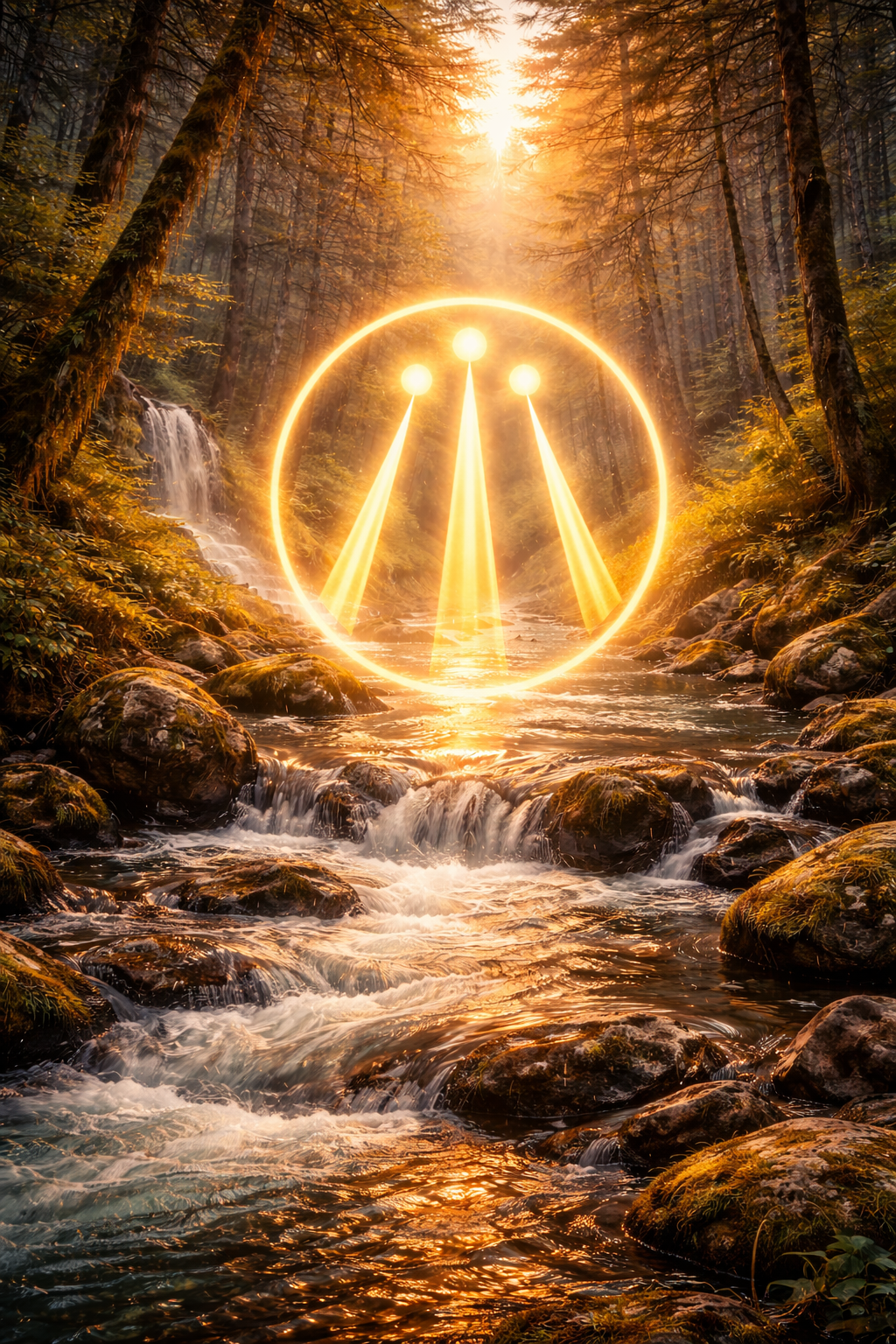
Today, Awen is often represented by a symbol of three rays of light. Inspired by 18th-century Druid revivalist Iolo Morganwg, this emblem carries deep meaning. The three rays are seen as the Triad of Light— reflecting the triple nature of existence and the sacred balance of life.
They also mirror the rising sun at key moments of the year—aligned with the solstices and equinoxes—echoing ancient stone circles where three stones often marked these celestial points.
The three dots beneath the rays represent the three drops of inspiration said to emerge from the Goddess’ cauldron—the essence of Awen itself.
Together, the symbol speaks of illumination, balance, and the eternal flow of inspiration.
The Awen I sing,
From the deep I bring it,
A river while it flows,
I know its extent;
I know when it disappears;
I know when it fills;
I know when it overflows;
I know when it shrinks;
I know what base
There is beneath the sea.
From the Medieval Welsh poem The Hostile Confederacy, Book of Taliesin VII (circa 1300s), translated by Mary Jones